


EAC to Promote Silver Fish as Source of Income
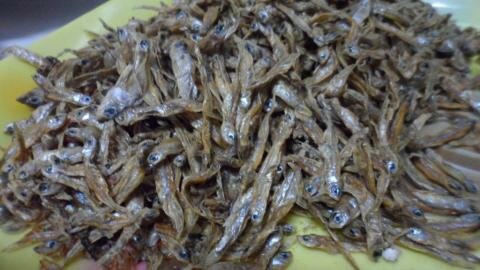
East African countries have been advised to promote dagaa, mukene or silver fish trade as a source of income and nutritional security to individual countries in the region.
The support measures should include setting up storage, processing and drying facilities, transportation facilities so that fish can be exported over long distances without any contamination.
The call was made by Sloans Chimatiro, the Fish Trade Coordinator of a joint fish program in Africa, funded by the African Union (AU) and the New Partnership for Africa's Development (NEPAD).
The meeting that took on Tuesday at the Entebbe central Inn was aimed at understanding the contribution of fish to inter regional trade.
The reason is that there is an increase in the production of small fish from Lake Victoria and is becoming an important food crop for nutrition and incomes, said Chimatiro.
"Information generated from this meeting will be used as evidence for making a case before policy makers that mukene is important and shouldn't be looked at as a poor man's crop but source of income which should be supported," said Chimatiro.
Mukene from Lake Victoria is being consumed by urban and rural people in Zambia, the Democractic Republic of Congo and Malawi because it can move longer distances through the waters, wind and physical transportation informally, added Chimatiro.
"The challenge is that the trade is being done informally, therefore tracking income and challenges faced by those trading in it is hard that is why governments must help for traders get value for money," he added.
The meeting comes against reports that there is an increase in the production of Mukene in Lake Victoria, but little has been done to make use of it for trade and reduction of stunted growth.
Why the increase of dagaa in Lake Victoria?
A recent lake wide acoustic surveys conducted to monitor the amount of fish in the lake showed an increase from a contribution of 20% (253,054 tonnes) in August 1999 to 42% (911,000 tonnes) in August 2011 and to 44% (1,289,757 tonnes) in August 2014.
The Nile perch which contributed 27% to total annual production in 2014 contributed 65% to the total value while mukene which contributed 55% in volume contributed only 16% (USD 135 million) to total value.
Mukene has got a high crude protein content is rich in Iron, zinc and calcium. Despite the high nutritive value, only 30% of the harvested dagaa is used for human consumption, the bulk (70%) for production of animal feeds, adds the report.
The other reasons for the increase of mukene are that Nile perch and Tilapia is heavily fished by about 65%. Tilapia breeds along the shores so it is easily fished and this destroys its breeding and nursery areas, explains Dr Oliver Makumbo from the Lake Victoria Fisheries Organization.
Also the Nile perch is heavily targeted and has been affected by weather changes that have affected the production of its food called hapoclomine.
"Fortunately for mukene, there are short lived and multiply faster. They are fished on a seasonal basis and this can only be done when there is no moon light meaning that they are self-regulated," she added.
What is being done at regional level?
At regional level, the East African Community (EAC) secretariat has developed mukene standards which were approved and declared by the sectrol council of trade ministers. The standard is addressing issues of foreign matter like sand, bad smell, mould, the moisture content including the packaging among others.
It will soon be gazetted so that implementation in member countries can start, explained Timothy Wesonga, from the Department of Agriculture and Food security at the EAC secretariat.
Current contribution of the fisheries sector is under estimated so the idea is to work with the statistical departments such that when compiling data, fish is given attention so that its contribution is noticed, Wesonga added.
Ends